Quick version: for actually trading memecoins from a phone, Fomo wins on fee (0.50% against 0.85%), on funding, and on having a discovery feed at all. For holding, dApps and maximum key control, Phantom wins and it isn't close. This is why half the people reading this will end up with both, which is the correct answer.

Fomo
Social trading app. Live feed of real trades, follow/alerts on traders, slide-to-buy, gasless UX, Apple Pay funding, embedded self-custodial wallet. Fee ≈0.50%, min ~$0.95; 10% off via referral.
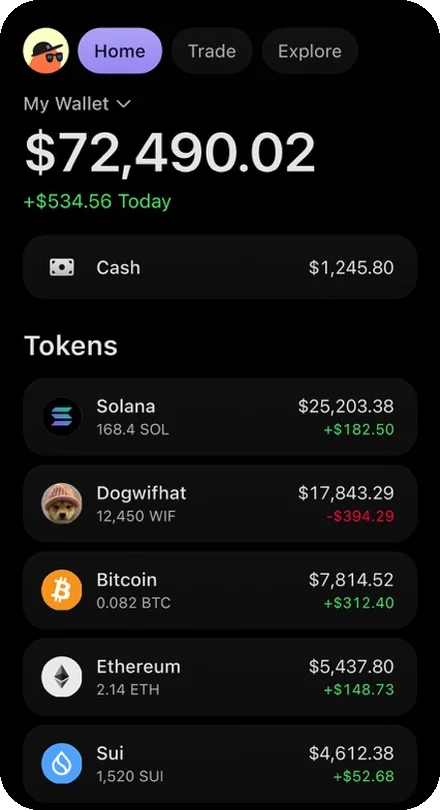
Phantom
The default Solana wallet. Seed phrase you control, NFTs, staking, dApp browser, multichain support: with swaps built in at ≈0.85%. No feed, no social layer, no card-native trading flow.
Fees: percentage vs minimum
| Trade size | Fomo (0.50%, min $0.95) | Phantom (0.85%) | Cheaper |
|---|---|---|---|
| $50 | $0.95 | $0.43 | Phantom |
| $110 | $0.95 | $0.94 | ≈ tie |
| $200 | $1.00 | $1.70 | Fomo |
| $1,000 | $5.00 | $8.50 | Fomo |
| $5,000 | $25.00 | $42.50 | Fomo |
The crossover sits around $110 per trade: below it Phantom's pure percentage is cheaper, above it Fomo pulls ahead and the gap widens with size. Fomo's 10% referral discount (code ThenFarYak) shifts the crossover down to roughly $100 and widens the lead at size. Phantom users also pay network gas separately and must keep SOL on hand for it; Fomo bundles that away.
Discovery: the real difference
Fees are arithmetic; discovery is the actual product gap. Phantom assumes you already know what you want to buy, you paste a ticker or an address. Fomo is built around finding the trade: a live feed of what's moving and who's buying, leaderboards, follow-alerts on specific traders. If your entries come from Twitter and Telegram anyway, Fomo moves that flow inside the execution venue. If you find that feed distracting or dangerous for your discipline (a fair concern), Phantom's silence is a feature.
Custody and security
Both are non-custodial, differently. Phantom hands you a seed phrase: total control, total responsibility, classic crypto. Fomo creates an embedded wallet tied to your login: nothing to write down, withdrawals to external wallets whenever you want, but account security equals wallet security: protect that email/Apple ID. Neither pools your funds exchange-style. On either app, the dominant risk remains the memecoins themselves.
Verdict
Trading-first: Fomo. Wallet-first: Phantom. They're complements more than competitors, the common power setup is trading on Fomo for the feed, fees and UX, then moving anything you intend to hold to Phantom where the seed phrase lives in your drawer, not your login.
Funding and cashing out
Getting money in: Fomo takes Apple Pay and debit cards natively, which makes the first deposit a 30-second affair; Phantom relies on third-party onramp partners inside the wallet, which work but add a step and their own card spreads. Both accept plain crypto transfers, which is the cheap route for anything serious.
Getting money out: from Phantom you're already in a full wallet: send anywhere, connect to any dApp, done. From Fomo you sell into USDC or SOL and send to an exchange or external wallet; the app supports withdrawals at any time, but the flow is built around trading, not treasury management. This is the practical reason the two-app setup works so well: Fomo optimizes money-in-and-trade, Phantom optimizes hold-and-move.
FAQ
Is Fomo cheaper than Phantom?
Can I use both together?
Which is safer?
Does Phantom have a social feed?
Sources
- Fomo: official website
- Phantom: official website (swap fee disclosure in-app)
- Datawallet. Fomo App Explained